Meyer 220R Turret Milling Machine

The Meyer Range of Milling Machines are high precision, very accurate and extremely versatile. The turret head can be inclined upwards and downwards, rotated in both vertical and horizontal planes, clockwise and anticlockwise. Each angle can be finely set due to the degree scales for all three variations. X, Y and Z axis are easily and accurately controlled by both the hand wheels, with micrometer scales which can be zeroed, and the DRO system.
The 220R and 220RX models accepts R8 tooling whilst the 375S and 560S models driven by powerful motors accepts ISO40 tooling. Infinitely variable power feed with fast overide button is fitted as standard to the X axis on the 220R and 220RX models and to X, Y and Z axis on the 375S and 560S machines.

Meyer 220R Turret Milling Machine
Download PDF Spec Sheet Meyer 220R Turret Milling Machine Download PDF Spec Sheet

Download
PDF Spec Sheet

Read More Meyer 220R Turret Milling Machine Read More

Read
More

Get In Touch Get In Touch

Get In
Touch

Features

  • High accuracy
  • Heavy duty
  • Hardened slideways
  • Centralised lubrication
  • DRO for X, Y and Z axis
  • Large table with T slots
  • Tapping facility
  • Motor brake lever
  • Coolant system
  • R8 tooling with power X axis
  • Halogen lamp
  • Safety guard with interlock
  • Swarf Tray

Technical Information

MODEL   220R
Spindle Taper   R8
Number of Spindle Speeds   16
Spindle Speed Range RPM 66 - 4540
Quill Travel mm 127
Quill Power Feed mm/rev 0.04/0.08/0.15
Motor kW 2.25
Longitudinal Travel - Long mm 850
Saddle Travel - Cross mm 305
Knee Travel - Vertical mm 350
Max Distance Spindle to Table mm 350
Table Size mm 230 x 1245
Head Movement Left/Right   90°/90°
Head Movement Up/Down   45°/45°
Length mm 1500
Width mm 1575
Height mm 2030
Weight kg 1060
Plate Rolling & How to Choose the Right Machine

Plate Rolling & How to Choose the Right Machine

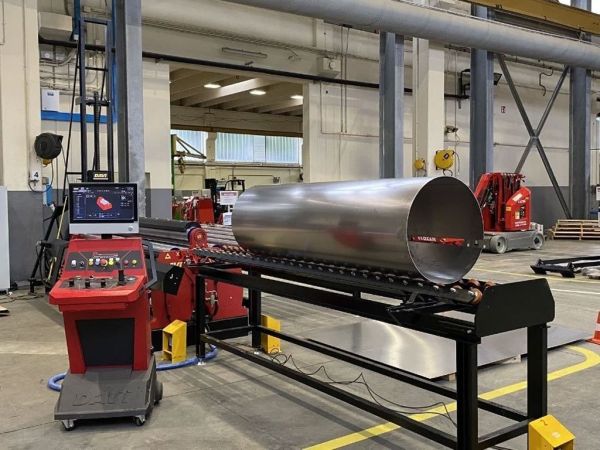
Plate rolling may look like a straightforward processes until you're standing in front of the a machine that is unsuitable for the task. This guide cuts through the options so you can make the right choice for your specific operation.

Read More

Read More

Unlocking Efficiency & Precision: Why UK Manufacturers Are Moving to Tube Laser Cutting

Unlocking Efficiency & Precision: Why UK Manufacturers Are Moving to Tube Laser Cutting

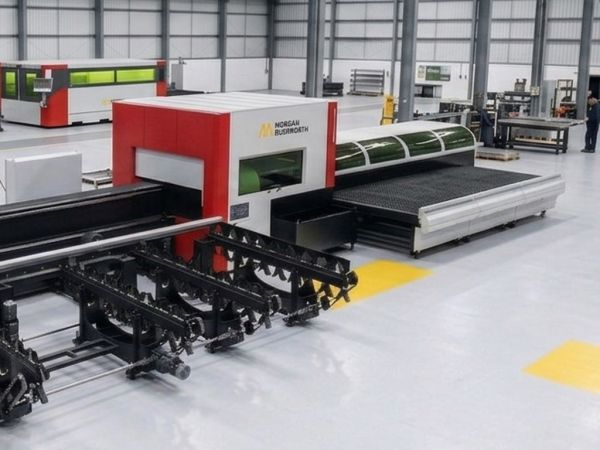
In modern metal manufacturing, staying competitive requires balancing speed, precision, and operational efficiency. Traditional tube processing methods, such as sawing, drilling, punching, and manual deburring, are notoriously labor-intensive and prone to human error. Each additional handling stage introduces potential for delay, increased costs, and inconsistency.

Read More

Read More
The Impact of the Defence Sector on UK Metal Fabrication Demand

The Impact of the Defence Sector on UK Metal Fabrication Demand

UK defence spending is rising at a pace not seen since the Cold War, and for metal fabricators with the right capabilities, that represents a significant commercial opportunity. Understanding where the demand is coming from, and what it means for workshop investment, is worth the attention of any fabrication business looking to grow.

Read More

Read More
Welding Fume Extraction: Improving Safety, Compliance and Productivity

Welding Fume Extraction: Improving Safety, Compliance and Productivity

In recent years, the Health and Safety Executive (HSE) has placed welding fumes under closer scrutiny, with scientific evidence linking exposure to a range of health issues, including lung cancer, neurological disorders, and asthma. Employers have a duty to provide a safe and healthy working environment for their staff, which includes putting effective controls in place to manage exposure to welding fumes — general ventilation on its own is not enough to adequately mitigate the risks. Although welders themselves may be adequately protected by PPE, the HSE has placed particular emphasis on other employees who share the same workspace.

Read More

Read More