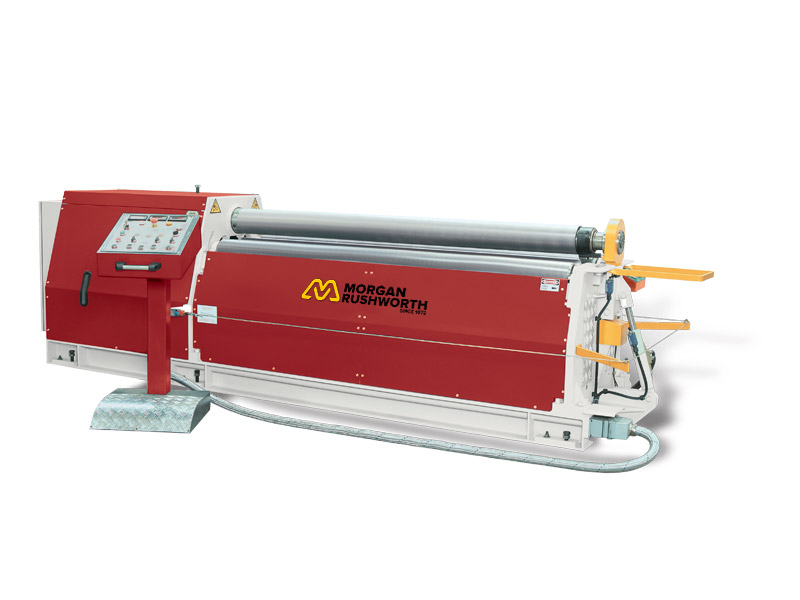
Morgan Rushworth DPBR-4 2050.245 Hydraulic 4-Roll Plate Bending Rolls

The DPBR-4 hydraulic bending rolls are available with roll diameters ranging from 150mm up to 260mm. They are of a 4 roll design with powered top and bottom pinch rolls and hydraulically adjusted side rolls. 4 roll bending greatly assists the operator, especially when rolling full cylinders and for multiple radius bending, as the work piece is always pinched between the top and bottom rolls. Pre-bending can be performed on both side rolls without removing the workpiece from the machine. All models have hydraulic drop end and are supplied with digital read outs to all three adjustable rolls to indicate roll position.

Morgan Rushworth DPBR-4 2050.245 Hydraulic 4-Roll Plate Bending Rolls
Download PDF Spec Sheet Morgan Rushworth DPBR-4 2050.245 Hydraulic 4-Roll Plate Bending Rolls Download PDF Spec Sheet

Download
PDF Spec Sheet

Read More Morgan Rushworth DPBR-4 2050.245 Hydraulic 4-Roll Plate Bending Rolls Read More

Read
More

Get In Touch Get In Touch

Get In
Touch

Features

  • Powered top and bottom rolls with hydro motor and cardan joint
  • Hydraulic drop end
  • Hydraulic up and down roll movement
  • Hydraulic pinching
  • Induction hardened rolls
  • Digital read out for both side rollers and pinch roll
  • Double pre bending to front and rear edge of plate
  • Cone bending device
  • Welded steel construction
  • Safety trip wire around the machine
  • Mobile control panel
  • Two rolling speeds
  • Central lubrication system

Options

  • Side and central sheet supports
  • Ground and polished rolls
  • Variable speed
  • NC controller
  • CNC controller

Technical Information

MODEL   DPBR-4 2050.245
Bending Length mm 2050
Rolling Capacity (5 x top roll) mm 13
Pre-bending Capacity (5 x top roll) mm 10
Rolling Capacity (1.5 x top roll) mm 10
Pre-bending Capacity (1.5 x top roll) mm 8
Top Roll Diameter mm 245
Working Speed m/min 1.5 / 6
Motor kW 7.5
Length mm 4000
Width mm 1550
Height mm 1500
Weight kg 5100
The Benefits of Fibre Laser Cutting Over Traditional Metal Cutting Methods

The Benefits of Fibre Laser Cutting Over Traditional Metal Cutting Methods

Discover the benefits of fibre laser cutting, compare more traditional cutting methods, and work out whether investing in a laser cutting machine makes sense for your business.

Read More

Read More
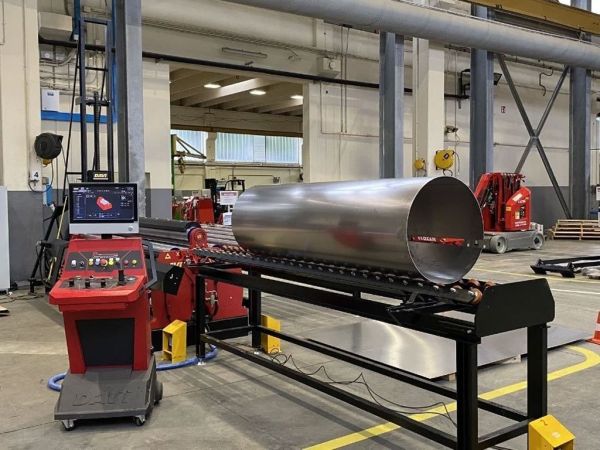
The Growing Demand for Custom Fabrication in Offsite Construction Projects

The Growing Demand for Custom Fabrication in Offsite Construction Projects

Offsite construction has moved past the “will it catch on?” stage. Modular units, panelised systems, pods and hybrid builds that mix factory-made components with traditional methods are now a normal part of how UK projects get delivered. For fabricators and manufacturers, that shift is creating a steady stream of work that doesn’t fit the standard catalogue.

Read More

Read More
Plate Rolling & How to Choose the Right Machine

Plate Rolling & How to Choose the Right Machine

Plate rolling may look like a straightforward processes until you're standing in front of the a machine that is unsuitable for the task. This guide cuts through the options so you can make the right choice for your specific operation.

Read More

Read More
Unlocking Efficiency & Precision: Why UK Manufacturers Are Moving to Tube Laser Cutting

Unlocking Efficiency & Precision: Why UK Manufacturers Are Moving to Tube Laser Cutting

In modern metal manufacturing, staying competitive requires balancing speed, precision, and operational efficiency. Traditional tube processing methods, such as sawing, drilling, punching, and manual deburring, are notoriously labor-intensive and prone to human error. Each additional handling stage introduces potential for delay, increased costs, and inconsistency.

Read More

Read More