

Welding Fume Extraction: Improving Safety, Compliance and Productivity
- 29-06-2026
- Peter Dawber
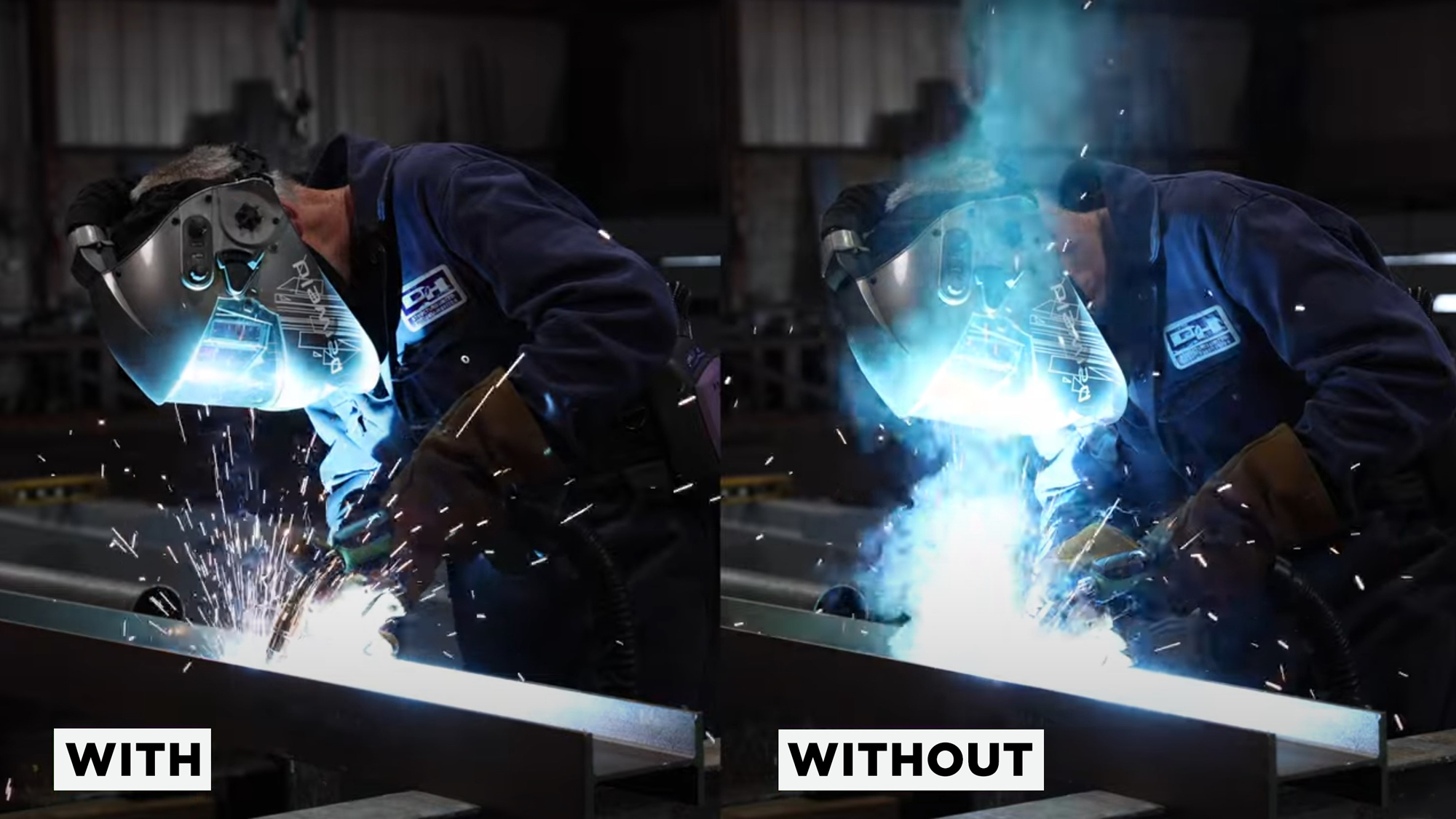
Welding fume extraction has become a critical consideration for manufacturers, fabrication companies, and engineering businesses across the UK. In recent years, welding fumes have come under increased scrutiny from the Health and Safety Executive (HSE), with growing scientific evidence linking exposure to serious health issues including lung cancer, occupational asthma, and neurological disorders.
Every employer has a legal responsibility to provide a safe and healthy working environment. This includes implementing effective welding fume extraction systems that reduce employee exposure to hazardous airborne contaminants. Importantly, general workshop ventilation alone is no longer considered sufficient to control the risks associated with welding fumes.
What are the options for welding fume extraction?
While welders may be protected through appropriate personal protective equipment (PPE), one of the HSE's key concerns is the exposure risk faced by other employees working within the same environment.
Without effective source capture, welding fumes can travel throughout a workshop, impacting personnel who may not be directly involved in welding activities.
There are several types of welding fume extraction systems available, each designed to improve workplace air quality and support compliance with COSHH regulations.
Common solutions include:
Centralised ducted extraction systems
Ducted extraction systems can provide effective coverage for dedicated welding areas
Mobile welding fume extractors with flexible extraction arms
Mobile fume extractors offer flexibility for changing workshop layouts
Downdraught welding benches
Downdraught benches are particularly useful for smaller fabrication work where components can be positioned directly on the extraction surface.
Limitations of Traditional Welding Extraction Solutions
Many traditional welding extraction solutions come with practical limitations that can affect both productivity and extraction performance.
Extraction arms require regular repositioning to remain effective, which can interrupt workflow and reduce compliance among operators. Mobile units often need to be moved between workstations, while some systems struggle to match the duty cycles of modern welding equipment.
Additional challenges can include high maintenance requirements, filter replacement costs, reduced extraction efficiency due to incorrect positioning, and limited flexibility when welding large fabrications, structural steelwork, or complex assemblies.
Because welding fumes are most effectively controlled at source, businesses are increasingly seeking advanced local exhaust ventilation (LEV) solutions that integrate seamlessly into the welding process itself.
Is There a Better Way of Extracting Welding Fume?
For many manufacturers, the ideal welding fume extraction solution must balance two priorities: operator safety and productivity.
A system that protects workers without slowing production can deliver significant long-term benefits, including improved employee wellbeing, regulatory compliance, and operational efficiency.
One of the most effective approaches to welding fume extraction is source-capture technology, where fumes are extracted directly from the welding torch before they have the opportunity to disperse into the surrounding workspace.
By capturing welding fumes at the point of generation, on-torch extraction systems can significantly improve air quality, reduce employee exposure to hazardous particulates, and support compliance with COSHH and HSE requirements.
This method is increasingly being adopted by manufacturers looking for a practical alternative to extraction arms and traditional LEV systems.
Unlike extraction arms that require constant repositioning, integrated torch extraction operates continuously alongside the welding process. This helps maintain extraction effectiveness throughout the shift while allowing welders to work efficiently on components of varying sizes and complexity.
Translas, a Dutch company with a long history of innovation in welding technology, has developed just that. Their welding torch extraction system is the safest, most effective method, with up to 98% of welding fumes being captured directly at source, along with a high level of operator satisfaction.
Main Benefits of Translas Welding Fume Extraction
- Welding fumes extracted at source
- Up to 98% capture rate
- 100% duty cycle for extraction units and torches
- Models for MIG, TIG and Cobot applications
- Single and double torch units
- Flow metre to ensure optimal extraction rate
- Self cleaning technology
If you would like to see welding torch extraction technology in action, our team can arrange a demonstration and advise on the most suitable welding fume extraction solution for your application.
Just give us a call us on 01785 336732, or email sales@bisonmachinery.co.uk.
Take the Next Step Towards a Safer Workplace
Investing in effective welding fume extraction is not only essential for compliance, but also for protecting the long-term health of your workforce and maintaining a productive manufacturing environment.
At Bison Machinery, we help UK manufacturers identify the most effective welding fume extraction systems for their application, whether that's a single welding bay, a fabrication workshop, or an automated welding cell.
Our team can advise on source-capture extraction, LEV solutions, filtration technologies, and welding fume control strategies that support both operator safety and productivity.
To discuss your requirements or arrange a demonstration, complete our contact form, call us on 01785 336732, or email sales@bisonmachinery.co.uk.
Edited article. Originally published 01/2025.
